
Vending machine ingredients to look for and avoid – a parent’s guide
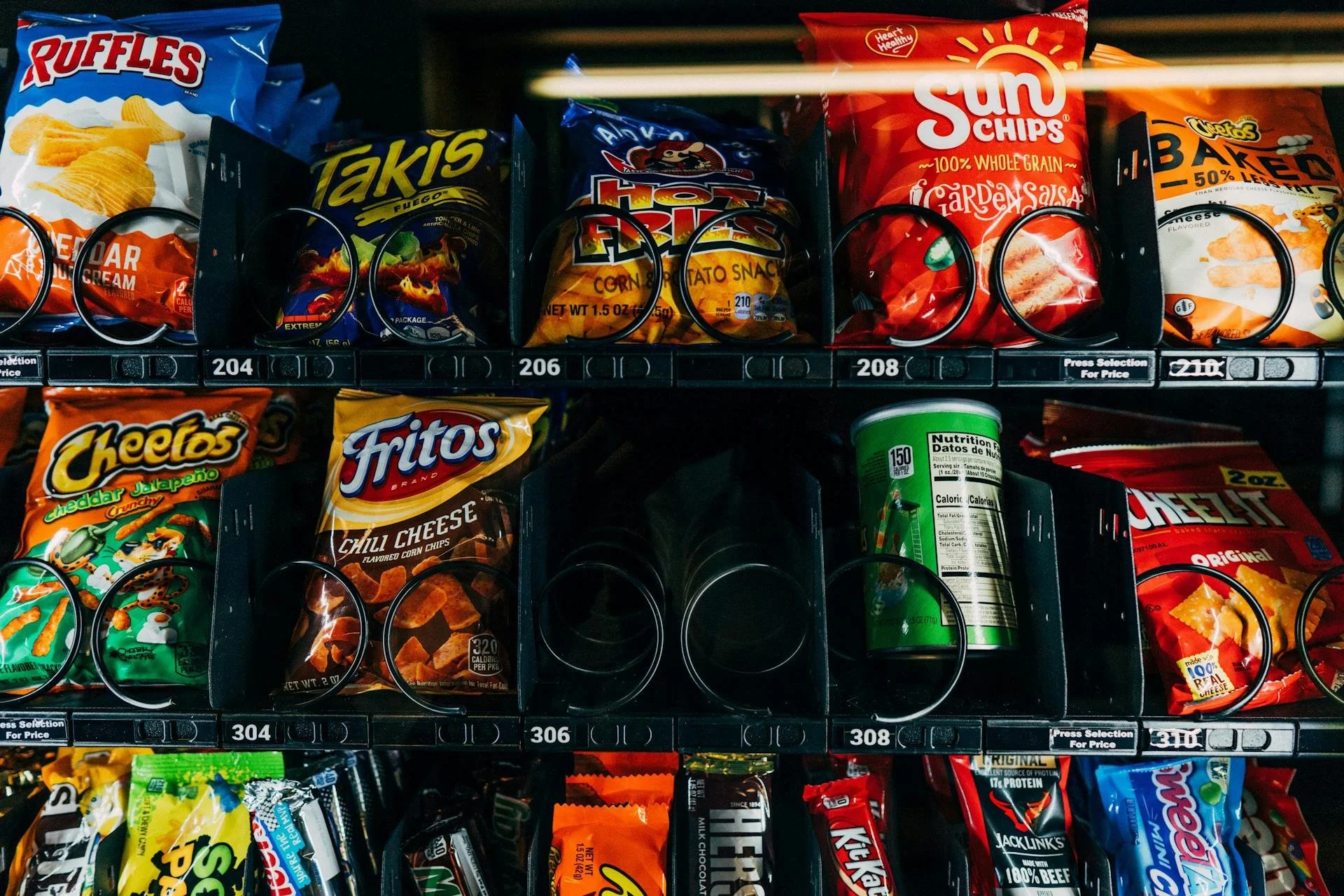
Most snacks are designed to look healthy on the front, creating a “healthy halo” effect. Bright packaging with words like “sugar-free” or “zero calories” makes them seem better than they really are.
But the ingredient list tells a different story. It shows what’s actually in the product and how heavily processed it may be.
In places like hockey rinks, sports centers, and gymnastics facilities, parents often have to make a quick decision. But scanning the ingredient list only takes a few seconds, helping you make a smarter choice.
You don’t need to overthink it. You just need to know what to look for. This quick checklist will help.
Avoid these ingredients
Seed oils
Seed oils are highly processed, cheap oils found in chips, crackers, bars, and fried snacks. Many families avoid them because these oils are linked to chronic inflammation and other long-term health concerns.
Seed oils to avoid:
Canola oil
Soybean oil
Corn oil
Cottonseed oil
Sunflower oil
Safflower oil
Grapeseed oil
Rice bran oil
Vegetable oil
Hydrogenated vegetable oil
Partially hydrogenated oil
Artificial food dyes
Artificial dyes are synthetic color additives derived from petroleum. They just add color, not nutrition. And research suggests these dyes affect children’s behavior.
Dyes to avoid:
Red 40
Yellow 5
Yellow 6
Blue 1
Blue 2
Green 3
Artificial sweeteners
Artificial sweeteners are common ingredients in vending machines. They’re often marketed as “healthier” because they reduce calories and sugar content. But many parents still choose to avoid them.
If the package says: Zero sugar, Low carb, Sugar-free, flip it over and check the list of sweeteners.
Artificial sweeteners to avoid:
Aspartame
Sucralose
Saccharin
Acesulfame potassium (Ace-K)
Neotame
Advantame
“Natural” sweeteners to avoid:
Erythritol
Xylitol
Maltitol
Sorbitol
High-fructose corn syrup (HFCS)
High-fructose corn syrup (HFCS) is a highly processed sweetener made from corn starch. It’s about 55% fructose, a type of sugar the body processes more slowly and less efficiently than regular glucose.
Too much HFCS leads to type 2 diabetes, liver issues, and other serious health concerns.
Additives, preservatives, and mystery ingredients
The more vague and chemical-sounding the ingredient list is, the harder it is to know what you’re actually eating. If you can’t pronounce half the ingredient list, consider not eating the snack at all.
Ingredients to avoid:
“Artificial flavors”
Modified food starch
Mono and diglycerides
Butylated Hydroxytoluene (BHT)
Butylated Hydroxyanisole (BHA)
Tertiary Butylhydroquinone (TBHQ)
Maltodextrin
Potassium sorbate
Propylene glyco
Polysorbate 80
Look for these instead
Short ingredient lists
Fewer ingredients usually mean less processing. There’s no ideal number, but three ingredients are better than a label that reads like a paragraph.
Recognizable foods
Look for ingredients that sound like actual food you’d keep in your kitchen.
Real fats
Not all fats are treated equally in packaged snacks. Since many “healthy” chips still use seed oils, always check the back label.
Better fat sources:
Butter
Ghee
Tallow
Olive oil
Coconut oil
Real sugars in moderation
A snack doesn’t have to be completely sugar-free to be reasonable. The total ingredient quality matters more than aggressive “zero sugar” marketing claims.
Better sweetener options:
Honey
Maple syrup
Dates
Coconut sugar
Cane sugar, but in moderate amounts
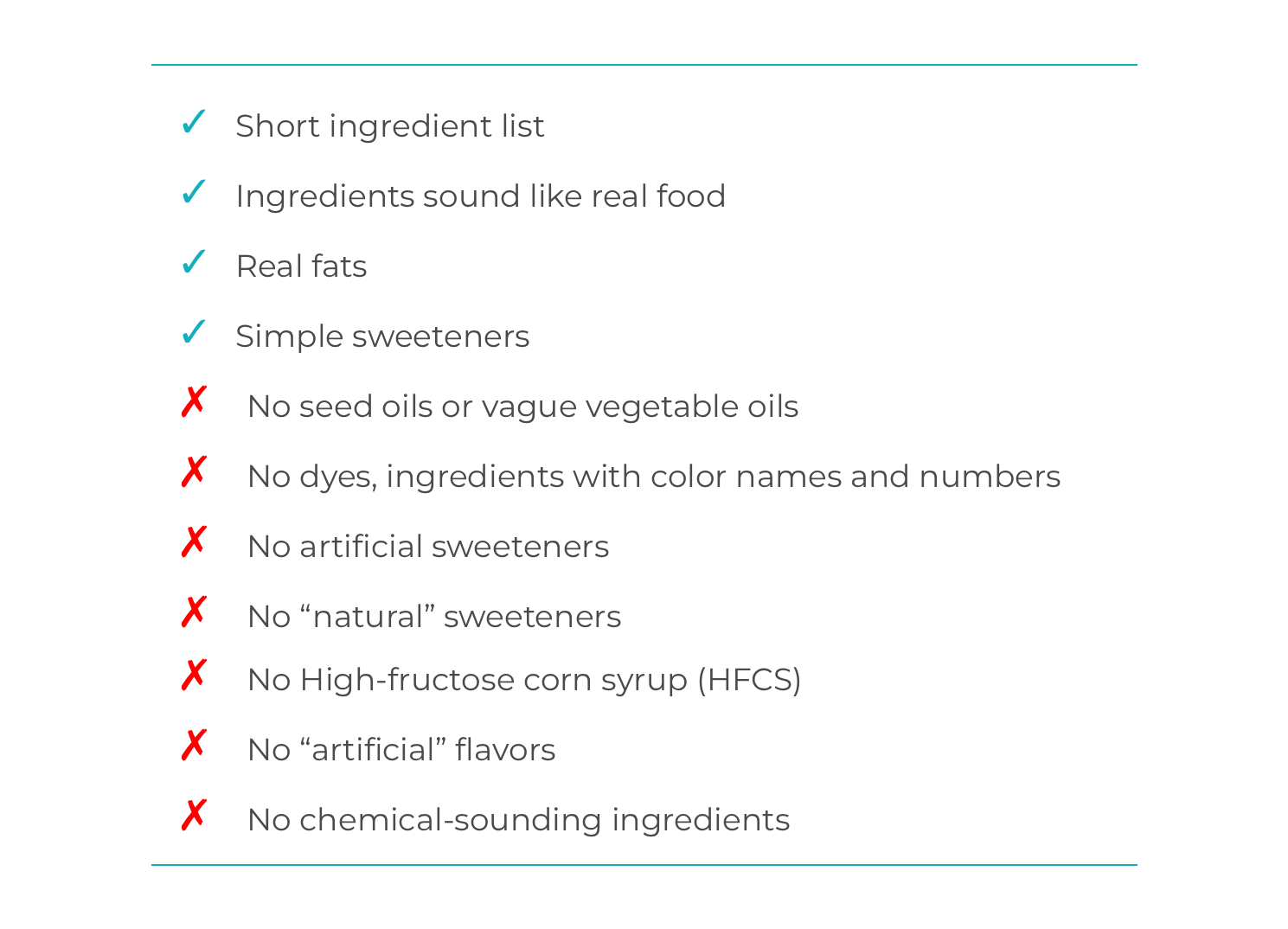
The 10-second snack checklist
The takeaway
Most vending machine decisions happen fast. Parents only have a few seconds to scan a label and make a call.
But it’s not hard.
The ingredient list tells you everything - short list, real food, no seed oils, no dyes, and no junk. That’s the difference between a heavily processed snack and one that families actually feel good about grabbing.
Better Snacks Co. places clean, healthy vending machines in all kinds of kids facilities. No seed oils, no dyes, no junk – and no hassle for your staff. Request more information.