
How to read a snack label in under 30 seconds
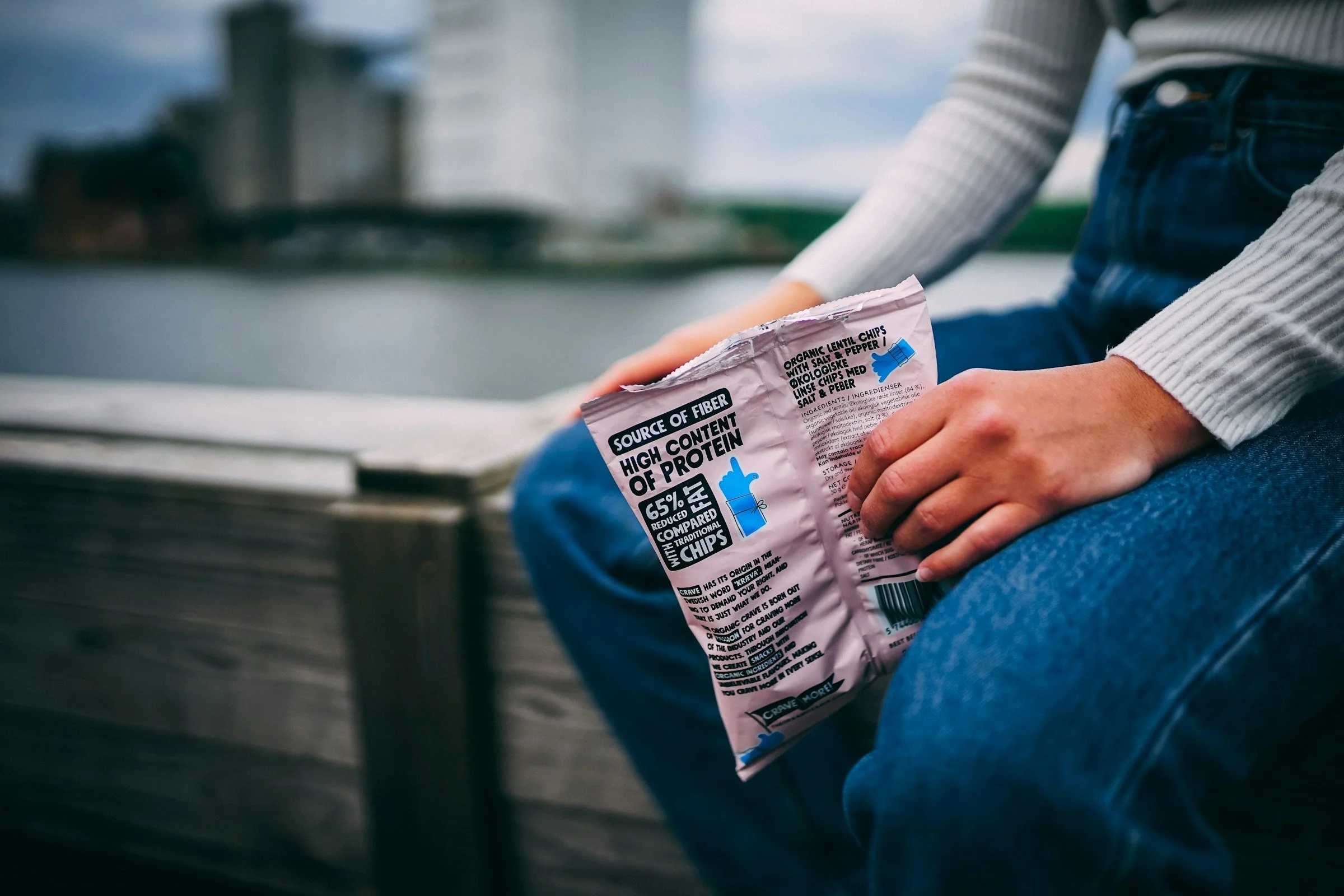
A vending machine snack can look fine from the front, with big labels like “Protein,” “Organic,” or “Low Sugar.”
But none of that tells you much.
If you want to see how processed a snack really is, skip the labels and nutrition facts. Go straight to the ingredient list on the back.
Here’s how to scan a snack label in under 30 seconds.
1. Scan the ingredient list, not the nutrition facts
The first thing to look at is the full ingredient list on the back. The nutrition panel only gives you numbers. The ingredient list tells you what’s actually in the snack.
A good ingredient list is:
Short. A shorter list usually means fewer preservatives, additives, and filler ingredients. Think around one to five ingredients.
Recognizable. Sugar, vinegar, butter - ingredients should sound like actual food you have in your kitchen.
If you want to see this ingredient standard in practice, our Snack Page has the full lineup.
2. Check which oils and fats are used
Find the oil source near the top of the ingredient list.
Avoid seed oils like generic vegetable oil, corn oil, safflower oil, cottonseed oil, canola oil, soybean oil, or sunflower oil.
Better alternatives are olive oil, butter, tallow, coconut oil, ghee, or avocado oil. Those are the fats we look for when we stock our machines.
3. Scan for artificial dyes - color additives with names and numbers
Artificial dyes show up as a color name plus a number, like Red 40, Blue 1, Blue 2, Yellow 5, Yellow 6, and Green 3.
These are petroleum-derived additives that have been linked to long-term health concerns in children.
They don’t always show up in obvious ways, either. They can also appear under different names or labeling terms like Fancy Red, Brilliant Blue, and Sunset Yellow. You can read more about those dye aliases here.
4. Watch out for vague or complicated sweeteners
Next, look out for high fructose corn syrup (HFCS) and artificial sweeteners like aspartame, advantame, saccharin, acesulfame potassium (Ace-K), sucralose, and neotame.
It’s also worth being cautious with “natural” sweeteners like xylitol, erythritol, sorbitol, and maltitol.
If you see vague terms like “syrup,” “solids,” or “concentrates,” that’s often a sign the sweetness source is more processed than it looks.
Choose simpler options like honey, coconut sugar, dates, maple syrup, and moderate amounts of cane sugar.
5. Keep it simple
If a product's ingredient list feels vague or full of chemical-sounding names you wouldn't normally choose for your kitchen, it probably doesn't belong in your body.
Better Snacks Co. places clean, healthy vending machines in all kinds of kids facilities. No seed oils, no dyes, no junk – and no hassle for your staff. Request more information.